The Demolition Job Looked Profitable.
Then the Dumpsters Started Rolling.
How one overlooked number can quietly shrink a solid residential teardown bid, and what experienced contractors can do before the next estimate goes out.
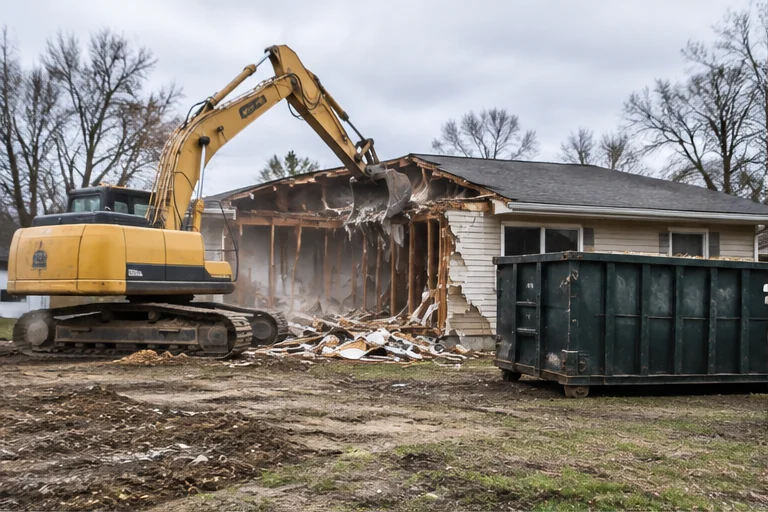
You know the feeling.
You walk the property. You look at the structure, the access, the concrete, the equipment you'll need. You've done jobs like this before.
So you build the estimate. Submit the bid. Get the call.
You're in.
Then the first loads start leaving the site.
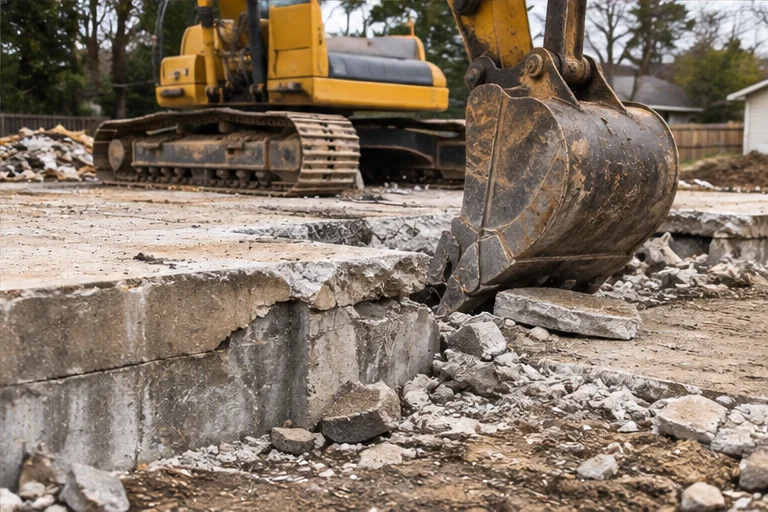
The debris is heavier than you planned for. The footing is thicker. The container count keeps climbing. And every extra haul adds another cost you didn't intend to absorb.
By the time the job is finished, your crew did their part. The customer got what they paid for. But your margin?
That's another story.
Here's the Part Nobody Can See From the Curb
There are two things a house can tell you from the outside: what it looks like, and roughly how much space it takes up.
What it won't always tell you is exactly how much material you're going to haul away.
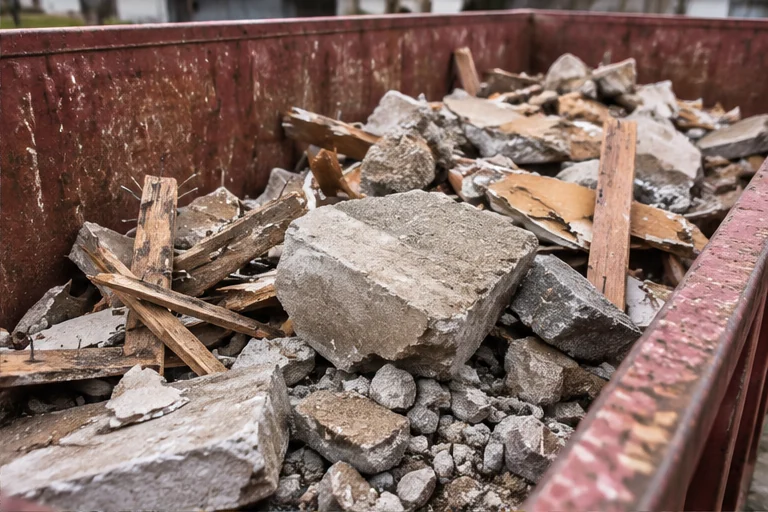
Two properties with similar square footage can produce different results. Heavier construction materials. More concrete. Additional layers. Unexpected foundations.
And for a contractor bidding a fixed-price job, that uncertainty isn't just a technical problem.
It's a financial problem.
How many of your disposal numbers are measured, and how many are assumptions?
Your field experience is valuable. But even experienced estimators benefit from knowing which numbers are dependable and which still carry risk.
The Three Costs That Can Quietly Eat a Bid
The frustrating part is that these costs rarely arrive as one dramatic surprise. They show up as a few more loads, a little more machine time, another invoice, another trip.
Separately, they seem manageable. Together, they can change the economics of the job.
In this example, an extra $1,500 of cost doesn't reduce the expected profit by 8%. It cuts it in half.
Free 21-question assessment · No obligation
Why “I've Done This a Hundred Times” Isn't Always Enough
Here's the thing: this isn't about bad contractors.
Great demolition operators can run a crew, manage the machines, protect the site and finish a job efficiently, and still face uncertainty when quoting what hasn't yet been torn apart.
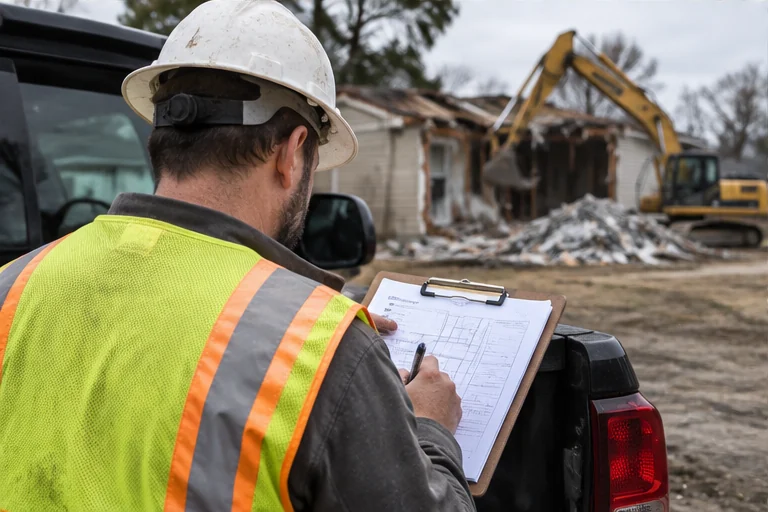
Some contractors rely on memory and past jobs. Others use spreadsheets, general contracting software or detailed takeoffs.
All of these methods can work. But each has a question attached to it:
Can you quickly explain where your dumpster estimate came from, and what happens if the materials are heavier than expected?
If the answer is “it depends,” you're not alone. But it's worth finding out whether your workflow is exposing you to avoidable surprises.
And More Paperwork Isn't the Answer, Either
You didn't get into demolition to sit behind a laptop all day.
A system that takes longer to operate than it takes to put the estimate together won't be used consistently. What a busy contractor needs is a process that's clear, fast and useful on real bids.
Not another generic dashboard. Not a pile of features nobody touches.
Better decisions before the price is locked in.
Does Your Estimating Process Leave Money on the Table?
Take a few minutes to review your real workflow, your job volume and your exposure to disposal surprises.
TAKE THE FREE DEMOLITION PROFIT CHECK →Personalized assessment · Mobile-friendly
What If You Could Spot the Risk Before You Hit Send?
Imagine your next residential teardown bid.
Instead of relying solely on a rough mental estimate, you work through the factors that influence debris quantity, container requirements and potential disposal fees.
It won't tell you what's hidden underground. It can't guarantee the exact tonnage of a structure you haven't opened up.
But a more systematic approach could help you recognize important assumptions before you commit to a fixed price.
That's the type of workflow a demolition-focused estimating tool should support.
And it's exactly what we're evaluating with our contractor assessment.
Find out whether your business is a good fit.
Answer questions about the jobs you take, how you estimate disposal, how often costs surprise you and what you want to improve. Get a tailored assessment based on your answers.
Why We're Asking Questions Before Offering Access
Not every demolition contractor has the same problem.
A business doing occasional interior cleanouts has very different estimating needs from a crew tearing down multiple houses a month.
Some owners need better disposal planning. Some need to reduce time spent preparing bids. Others already have a solid estimating process and may not need another tool at all.
That's why the Demolition Profit Check looks at how your actual operation works instead of giving every contractor the same pitch.
Could You Qualify for a Free First Month?
We're assessing interest in a demolition-focused estimating platform, with a proposed offer of the first month free for eligible contractors once access is available.
The quiz helps identify fit. It is not an automatic guarantee of a free month, and it doesn't create a trial account by itself.
If the product sounds useful for your operation, the free assessment is the place to start.
Your Next Bid Deserves a Second Look.
The jobs that frustrate contractors most aren't always the jobs where something went wrong on site.
Sometimes the job went smoothly. The customer was happy. The crew delivered.
And the money still wasn't there.
Before your next bid goes out, find out where your estimating process may be exposed, and whether your business could be a fit for first-month-free access when the platform launches.
SEE IF MY DEMOLITION BUSINESS QUALIFIES →Takes a few minutes · No credit card required for the assessment
Quick Questions
Is the assessment really free?
Yes. The assessment is free to complete and does not require payment.
Will I get a working estimating tool immediately?
Not currently. The platform and trial offer are being finalized. The assessment helps evaluate your needs and potential eligibility; it does not automatically open a trial.
Does this replace an on-site inspection or engineering survey?
No. Any future estimating software would be a planning aid, not a substitute for site investigation, required professional surveys, safety procedures or contractual review.
How long does the assessment take?
It contains 21 short, multiple-choice questions. Most can be answered with a quick tap.